Linguiça Before Lunch: A Saturday Spent Eating My Way Through New Hampshire's Flea Markets
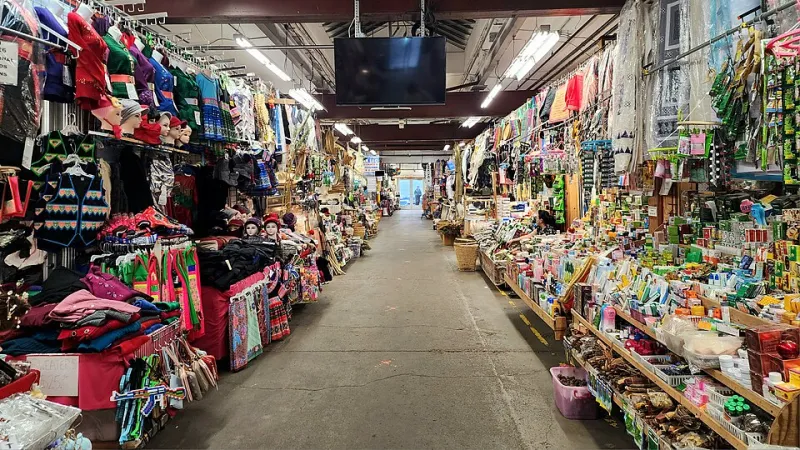
Photo: Pingnova, CC0, via Wikimedia Commons
There's a moment, usually around 7:45 on a Saturday morning, when the logic of a flea market inverts. You came for the vintage fishing lures. You leave thinking about a sandwich.
That's the thing nobody tells you about New Hampshire's swap-meet circuit: the antiques are the cover story. The food is the reason people set their alarms.
Three Markets, One Morning
The plan was simple. Hit the Hollis swap meet when the gates opened at seven, roll over to an estate auction in Goffstown by mid-morning, and finish at an antique show in the Lakes Region before the vendors started packing up. Eat breakfast at each. It sounded excessive on paper. It felt necessary in the car.
At the first stop, the food vendors had already beaten the pickers to their spots. A flat-top griddle sat over a propane burner, and the smell of onions hitting hot oil carried further than any of the hand-painted signage. The line, six deep by 7:20, wasn't for the records or the rusty tools. It was for a Portuguese sausage sandwich — a half-pound of linguiça griddled until the casing snapped, piled onto a soft roll with fried peppers and a swipe of hot sauce from an unmarked squeeze bottle.
The woman running the griddle, who asked to go by her first name only — "the town doesn't need to know how much I make at these things" — has been doing the circuit for eleven years. "I started with coffee and doughnuts," she told me, flipping a sausage with a spatula that has clearly outlived several spatulas. "Then one week I brought the linguiça, and I never brought doughnuts again."
The Semi-Legal Gray Zone Everyone Pretends Not to Notice
Here's where the story gets interesting. A lot of this food vending exists in a cheerful regulatory haze. Flea market food stands — some licensed, some operating under a vendor's temporary permit, some just... there — are a beloved fixture of New Hampshire's spring-to-fall calendar. Health inspectors do make rounds, and the reputable operators keep their setups clean and their paperwork close. But the vibe is distinctly informal: cash boxes, card tables, coolers on ice, and a shared understanding between cook and customer that everyone's better off not asking too many questions.
It's a very New England arrangement. The state has always had a high tolerance for a person selling something homemade out of the back of a truck. Ask anyone who's bought a jar of pickles at a roadside stand with a coffee can for a cash box.
The Auction Breakfast
By 9:30 I was in Goffstown, at a grange hall auction where a retired schoolteacher was selling off fifty years of accumulated furniture. The auctioneer's cadence drifted out the propped-open kitchen door, where two volunteers from the grange were running a full breakfast operation — pancakes, home fries, bacon by the slab, and coffee strong enough to strip varnish (appropriate, given the merchandise).
This is the part of the tradition that predates the flea markets entirely. Grange halls have been feeding auction crowds since before anyone thought to call it "food culture." The pancake batter gets made before dawn. The home fries get parboiled the night before. The price is somewhere between donation and steal, and the proceeds go toward the hall's roof, or the furnace, or whatever's failing this year.
A man beside me in line, mid-bite into a bacon-heavy plate, put it plainly: "I've bought three dressers here in my life. I've eaten breakfast here maybe forty times. You do the math on what actually matters."
Why the Cult Followings Form
The final stop was an antique show near the lakes, where the food situation had escalated from griddle to full pop-up: a chowder kettle, a sandwich board, and a dessert table that would embarrass most church suppers. The crowd here skews serious — dealers with flashlights and loupes — and they take their lunch as seriously as their haggling.
What makes these meals worth following is that they can't be replicated. There's no storefront, no website, no Yelp page. You learn about the good stands the way people learned about good stands for a century: word of mouth, a tip from a fellow shopper, a smell on the wind. The linguiça lady doesn't post her schedule. You find her or you don't.
There's also the math. Ten dollars at a flea market buys you a sandwich that would run eighteen at a Portsmouth brunch spot, eaten standing up in the sun, with a side of people-watching you can't manufacture. The food tastes better because you earned it — you were up early, you walked the rows, you haggled over a butter churn you absolutely did not need.
Go Early, Bring Cash, Trust Your Nose
If you want in on the circuit, the rules are few. Arrive when the gates open; the best food vendors sell out by eleven. Bring small bills. Ask the antique dealers where they eat — they know every griddle on the route. And if you see a line of people who look like they've been doing this every Saturday for a decade, get in it.
The furniture, by all accounts, is fine. But the fork is the real find.