Golden, Amber, Dark: Why New Hampshire's Sugarhouses Are Tasting Maple Like Fine Wine
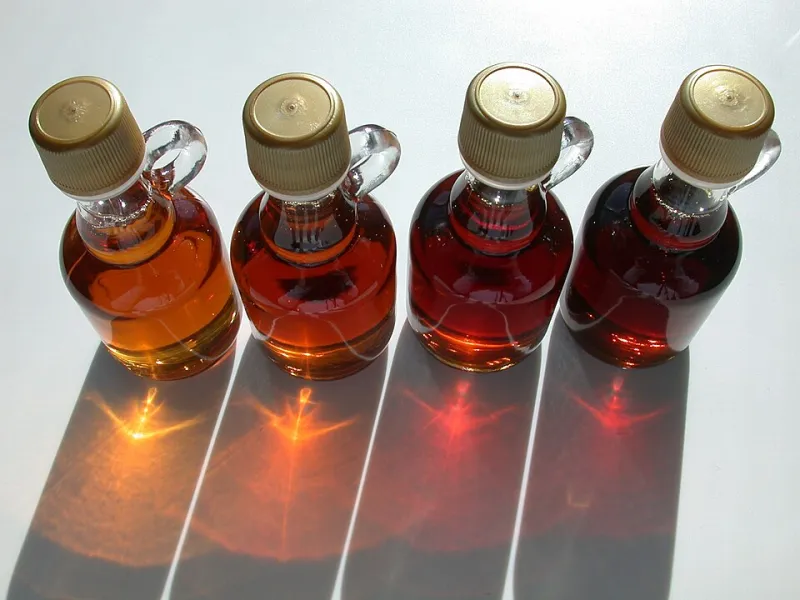
Photo: Dvortygirl, CC BY-SA 3.0, via Wikimedia Commons
There's a moment at nearly every serious sugarhouse in New Hampshire when the conversation turns from sap to terroir. Not literally — most sugarmakers will laugh if you use the word — but the concept is there all the same. Trees tapped on a north-facing slope in Sugar Hill produce syrup that tastes different from trees along the Merrimack. The soil, the snowpack, the timing of the thaw: it all ends up in the bottle.
If that sounds like wine talk, that's because it basically is.
The Grade System, Decoded
Forget the old Grade A versus Grade B debate. Since 2015, Vermont and New Hampshire have used the USDA-aligned system that sorts syrup into four categories, and understanding them is the fastest way to sound like you know what you're doing at a farm stand.
Golden Color, Delicate Taste — the early-season pour. Light, almost floral, with a faint vanilla note. This is what chefs drizzle over fresh chèvre or use in a vinaigrette where they don't want the syrup to shout.
Amber Color, Rich Taste — the crowd-pleaser. Full maple flavor without heaviness. If you're buying one bottle for pancakes, this is it.
Dark Color, Robust Taste — mid-to-late season sap, boiled longer, with deeper caramel and almost brown-butter undertones. Bakers love it because the flavor survives the oven.
Very Dark, Strong Taste — the final runs of the season. Bold, molasses-adjacent, and increasingly prized by bartenders and pitmasters. A growing number of NH distilleries and breweries are using very dark syrup in everything from barrel-aged cocktails to maple porters.
Meet the Sugarhouse Sommeliers
At small operations around the state, tasting flights aren't a gimmick — they're how producers decide what to bottle, what to blend, and what to save for the farmers market regulars who ask for "the dark stuff."
The technique mirrors wine tasting more closely than you'd expect. Pros warm the syrup slightly, pour a small amount into a clear glass, and nose it first — good syrup can smell like butterscotch, hay, or even white wine depending on the season. Then a small sip, held on the tongue, with attention to where the sweetness lands and whether there's any off-note (buddy syrup, a bitter defect that shows up in very late-season sap, is the maple equivalent of cork taint).
What surprises most first-timers is the range. A side-by-side flight of Golden and Very Dark from the same sugarhouse can taste like two entirely different products. That's the season working: sap changes character as the weather warms, and the boil captures a snapshot of a specific week in a specific place.
Build Your Own Tasting Flight at Home
Want to taste like a sugarmaker? Here's the beginner's setup:
- Buy three grades from the same producer if you can — Golden, Amber, and Dark. Same source means the differences are purely seasonal.
- Use small glasses. Shot glasses or tasting glasses work. You're looking, sniffing, and sipping, not pouring over a stack of French toast (yet).
- Warm gently. Room temperature or slightly warm opens up the aroma. Never microwave the tasting portion.
- Taste light to dark. Start with Golden and work your way up so the robust grades don't overwhelm your palate.
- Cleanse with water and a plain cracker between pours.
- Take notes. Look for descriptors like vanilla, caramel, butterscotch, toffee, smoke, or molasses. There are no wrong answers.
Why Chefs Are Paying Attention
The gourmet moment is real. Restaurant kitchens across New England — including several in Portsmouth, Manchester, and the Lakes Region — have started listing the sugarhouse on the menu the way they'd list a vineyard. A golden-grade syrup might appear alongside a cheese course; a very dark might finish a roasted squash dish or make its way into a cocktail with rye and bitters.
Part of it is the local-food momentum that never really slowed down after the farm-to-table wave. Part of it is that New Hampshire's small-batch producers can do something commodity syrup can't: offer provenance, vintage-like variation, and actual flavor differences you can taste blind.
Where to Start Tasting
New Hampshire Maple Weekend, typically held in late March, is the easiest entry point — sugarhouses across the state open their doors for tours, tastings, and sap-on-snow demonstrations. Beyond that weekend, most sugarhouses welcome visitors during the season (generally February through early April, depending on the weather) and many farm stands and co-ops carry multiple local grades year-round.
Call ahead, bring a cooler, and don't leave without asking what the sugarmaker's favorite grade is. You'll usually get an opinion — and often a taste.
Because in New Hampshire, syrup isn't just a topping. It's a harvest, a vintage, and increasingly, something worth tasting slowly.