Field to Fire: How New Hampshire Chefs Are Putting Venison Back on the White Tablecloth
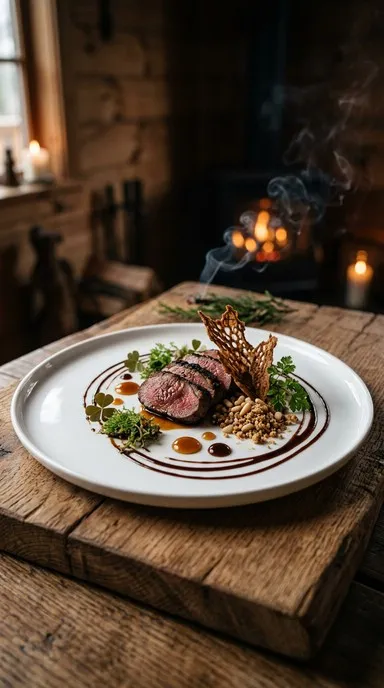
Photo: seared venison fine dining plate rustic restaurant, via images.stockcake.com
There's a moment at a certain North Conway kitchen — we'll get to where — when the server sets down a plate of seared venison loin with charred parsnip and a juniper reduction, and you realize the animal on your fork probably lived within twenty miles of the dining room. Not the farm. The woods.
Wild game is having a moment in New Hampshire, and unlike the farm-to-table wave that swept through New England a decade ago, this one comes with a hunting license, a mycology guide, and a whole lot of opinions about field dressing.
The Chefs Who Hunt Their Own Menus
Ask around the state's restaurant kitchens and you'll keep hearing versions of the same story: a chef grew up in a family where deer season was a calendar event, went to culinary school, and eventually realized the two halves of their life belonged on the same plate.
That's the arc behind a growing handful of Granite State kitchens working with legally harvested game. New Hampshire's rules are strict — restaurants can't simply buy wild venison over the counter, since the sale of wild game meat is prohibited. So the chefs doing this well work through legal channels: farm-raised venison suppliers in the region, partnerships with licensed processors, and special events where whole animals sourced through legitimate channels become the centerpiece.
The result is menus that read like a hunting journal. Venison tartare with pickled ramps. Braised shank over hasty pudding. Even partridge — the ruffed grouse that New Hampshire hunters chase through October thickets — shows up in pan sauces and ragus at spots that aren't afraid to cook what actually lives here.
Foraging Is the Other Half of the Story
Game alone doesn't make a forest-to-table menu. The forests do the rest.
Spring brings fiddleheads and ramps; summer delivers chanterelles and black trumpets; fall is maitake — hen of the woods — hanging off oak stumps like bad luck. A new generation of foragers supplies restaurants with wild mushrooms and greens, and the good ones treat their patches like trade secrets. One forager who works with several White Mountain-area kitchens described her spots the way a fisherman talks about a hidden brook: reluctantly, generally, and never with coordinates.
For diners, the payoff is flavor you genuinely cannot buy in a supermarket. A wild maitake roasted crisp tastes nuttier and deeper than anything cultivated. Ramps taste like spring itself decided to get aggressive.
Where to Try It Yourself
A few ways in, depending on your appetite for adventure:
- Tasting menus with wild elements. Watch for special game dinners in late fall and winter — many restaurants around the White Mountains and the Lakes Region run one-night venison and game events once the season turns.
- Farm-raised venison. Several New England farms raise deer legally for restaurants and retail; some farm stores in the state sell venison steaks and sausage you can take home.
- Forage with a guide. Guided mushroom walks run through the warmer months around the Whites. Go with an expert — this is the one grocery errand where being wrong has consequences.
- Ask questions. Servers at restaurants that lean wild are usually proud of their sourcing. Ask where the venison came from. The answer is often a story worth hearing.
Why It Matters
New Hampshire has always eaten from its woods — deer camps, grouse coverts, and fishing holes are part of the state's cultural wiring. What's new is the technique. Young chefs trained in fine dining are applying the same precision to a haunch of venison that they would to a rack of lamb, and treating foraged ingredients not as rustic garnish but as the backbone of a dish.
The wild game revival isn't a stunt. It's the state's oldest food tradition finally getting the kitchen it deserves. Bring your appetite — and maybe skip the steak frites this once.