The Swap Table Rules: How New Hampshire Church Halls Turn December Into a Cookie Economy
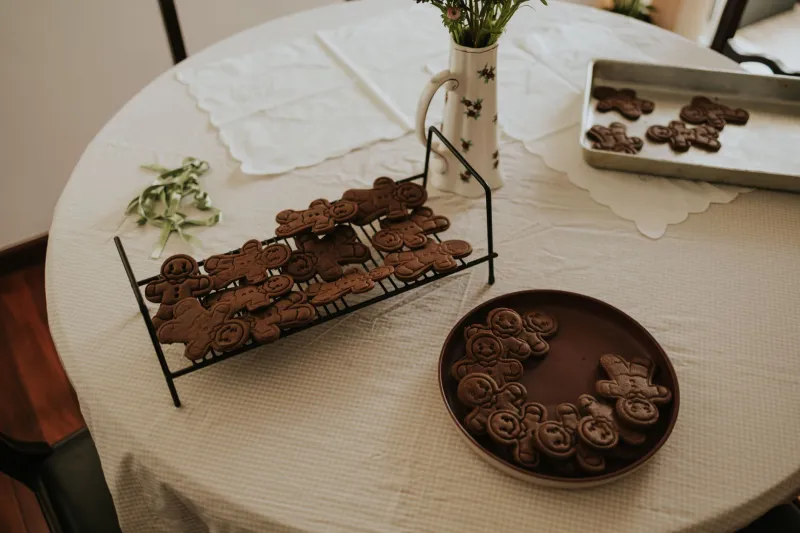
December in New Hampshire has a smell. It is not just pine or woodsmoke, though both are in the mix. It is sugar and butter and shortening, rising from church basements and community centers from Concord to Berlin. The holiday cookie swap is one of the state’s most reliable December rituals, a low-stakes potluck with high standards and a very specific social contract.
You do not need a reservation. You do not need a sommelier, a coat check, or a parking strategy. You need a few dozen cookies, a label, and the willingness to go home with a mixed box that says more about your neighbors than any neighborhood newsletter.
The Circuit Runs on Rules
The swap circuit is not one event but dozens of small ones, staggered across the first three weekends of December. Some are tied to churches, some to granges, some to libraries and rec centers. In 2026, the calendar is already filling, and the formats are remarkably consistent. Participants bring a set number of cookies — often six dozen, sometimes four — and leave with an assortment built from everyone else’s contributions.
The stated purpose is variety. The real purpose is quality control. A good swap keeps a household from baking four kinds of cookies and eating the same two for three weeks. It also keeps the holiday table from becoming a monument to one enthusiastic aunt’s spritz press.
Three Hosts, Three Basements
Diane has run a swap at a Concord church hall for more than a decade. Her operation is precise: sign-up sheet, name tags, numbered tables, and a stack of disposable gloves. She has seen everything, including a year when two people brought the same peanut butter blossom and a year when someone tried to pass off store-bought pinwheels as homemade. The pinwheels were allowed. The lack of a label was not.
Ruth, who hosts in Berlin, runs a smaller, scrappier swap in a community room with bad lighting and excellent coffee. Her crowd skews older, and the cookie list skews toward the kind of recipes that use shortening and a lot of vanilla. She does not believe in themes. She believes in bar cookies, because they travel well, cut neatly, and do not require a discussion about whether the icing is supposed to be that color.
Ellen, in Keene, turned her church-hall swap into a neighborhood institution by adding a rule that everyone seems to love: no duplicates. Not no duplicate cookies from the same baker, but no duplicate varieties on the table. If two people sign up for chocolate chip, the second person has to pivot. The result is a stranger, more interesting box. It is also the source of the most annual drama.
The Unwritten Rules, Written Down
The swap has an etiquette, and it is not complicated. Bring what you signed up for. Label your cookies with the name and any allergens. Do not hover over the table while people are choosing. Do not bring a cookie that requires refrigeration unless you have told the host. And do not assume your family favorite is universally beloved.
The no-duplicates rule is less universal, but it is spreading. So is the bar-cookie advantage. Bar cookies win because they are easy to portion, easy to stack, and less fragile than a spritz. They also feel generous. A lemon square or a raspberry crumble bar says you thought about the person on the other end of the table. A spritz says you own a cookie press.
Labels are non-negotiable. A swap without labels becomes a game of roulette with nuts. The label does not need to be fancy. An index card and a Sharpie will do. But it should include the cookie name, the baker’s name, and a note about allergens. In 2026, this is basic courtesy, not extra credit.
How to Host a 2026 Swap Without Drowning in Spritz
If you are hosting your own swap this month, start with a cap. Six to eight varieties is plenty for a small group. Ten is a crowd. Twelve is a table that looks beautiful and a fridge that looks terrifying. Ask people to bring a set number of cookies and a container to carry them home.
Set the rules in the invitation, not at the door. Say whether duplicates are allowed. Say whether store-bought is allowed. Say whether children are welcome. Say what the host is providing — coffee, cocoa, maybe a pot of soup — and what guests should bring. A swap with vague rules becomes a swap with hurt feelings.
Portion control matters. If everyone brings six dozen and takes six from every variety, the math can get ugly. A good host has extra containers on hand, a few gallon bags, and a plan for leftovers. Some swaps donate extras to a local shelter or fire station. Some hosts keep a small plate for the church staff. Either way, nobody needs nine pounds of the same spritz.
The Point Is Not the Cookies
The cookie swap is a practical solution to a practical problem: how to get variety on the holiday table without baking all day. But it is also a small, stubborn institution. It gets people into church basements in December. It gives neighbors a reason to talk. It turns a plate of cookies into a map of who lives where and who bakes what.
The cookies are the excuse. The swap is the point. And in New Hampshire, where December can be dark and cold and very long, that is worth a few dozen bar cookies and a Sharpie label.