Twelve Stools and the Truth: Why New Hampshire's Single-Counter Diners Are Worth Saving
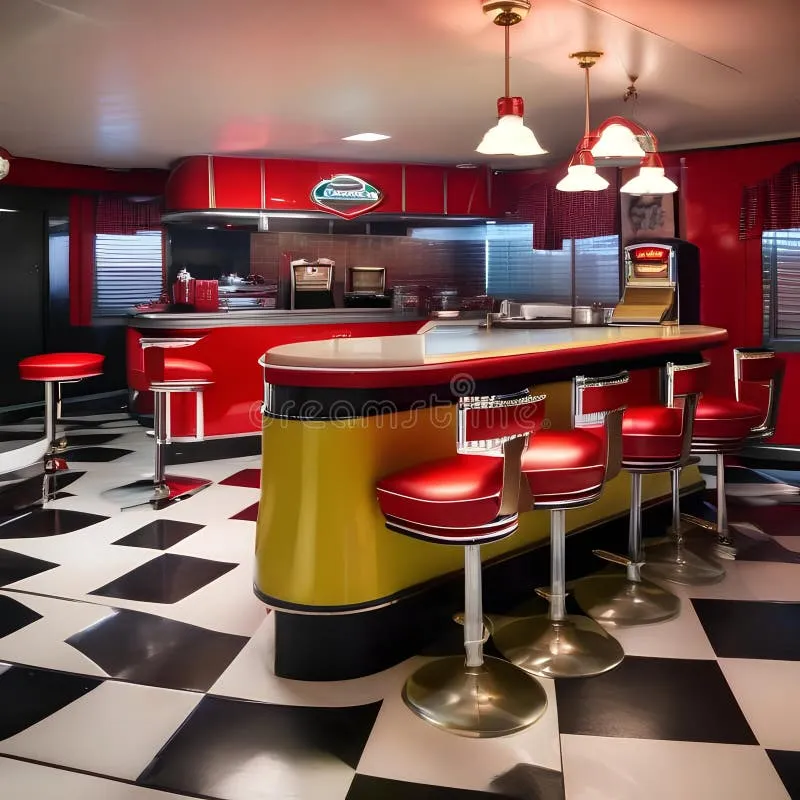
Photo: vintage diner counter with red vinyl stools and griddle, via thumbs.dreamstime.com
There's a particular sound a diner stool makes when it spins. A low, metallic creak, followed by the soft squeak of a body settling into vinyl that's been warmed by a hundred thousand breakfasts before yours. You can't hear it at a drive-thru. You can't hear it at a bistro with a reservation policy and a QR code menu. You can only hear it when you pull yourself up to a counter that has maybe a dozen seats, a griddle hissing six feet away, and no option whatsoever for 'to-go.'
New Hampshire still has a handful of these places, and I'd argue they're the most important dining rooms in the state. Not the fanciest. Not the most photographed. The most important.
Three Counters, One Griddle, No Reservations
The first stop on my unofficial counter tour was a lunch counter in the Monadnock Region that's been flipping pancakes since Eisenhower was in office. Twelve stools. One griddle. A coffee pot that has never, in living memory, been fully empty.
The second was a mill-town counter where the menu hasn't changed much since the 1970s, and nobody wants it to. The third was up north, a narrow sliver of a diner where the owner works the flat-top and her mother works the register, and the regulars answer each other's questions across three stools of distance.
What struck me at all three wasn't the food — though the food was honest, hot, and priced like it was 2019. It was the geometry. A counter forces a kind of proximity we've spent two decades engineering out of our lives. You sit elbow-to-elbow with a plumber, a retiree, a ski patroller on her day off. Somebody asks about the weather. Somebody answers. That's it. That's the whole business model, and it's irreplaceable.
The View From the Third Generation
The owners I talked to are mostly second- and third-generation, and they are tired in a way that has nothing to do with the 4:30 a.m. alarm. Eggs, they'll tell you, cost what beef used to cost. Insurance premiums read like phone numbers. And the drive-thru down the road — staffed by teenagers, open twenty-four hours — has siphoned off the 8 a.m. crowd that used to be a given.
One owner put it to me plainly: 'My grandmother competed on food. I compete on convenience, and I lose.'
And yet they stay. Partly it's obligation — the regulars, the town, the name on the awning. Partly it's the stubborn New Hampshire conviction that if it was good enough in 1958, it's good enough now. But mostly, I think, it's because they know something the rest of the restaurant industry is only now rediscovering: people are starved for places where they're known.
Why the Counter Beats the Tasting Menu
I like a good tasting menu as much as anyone who writes for a food site. But I've never left one feeling more connected to my town. I have, however, left a twelve-stool counter at 7:15 on a Tuesday knowing which neighbor's kid made the honor roll, where the plow crews are heading tonight, and exactly how the selectmen meeting went.
A counter is a tasting menu of a different kind — a tasting of the place itself. The griddle smoke. The local gossip. The coffee that arrives before you order it because the owner saw you walk in.
Go Sit Down
So here's my pitch, and I don't think I'm being sentimental: if there's a counter diner within a half hour of you, go this week. Bring cash. Order the special. Spin the stool once when nobody's looking. These places don't survive on nostalgia — nostalgia doesn't pay for eggs. They survive on a Tuesday regular who shows up, and another one, and another one.
New Hampshire has done a remarkable job protecting its mountains and its maple trees. It's time we extended the same instinct to twelve vinyl stools and one very tired, very beloved griddle.