Perch, Propane, and Peri-Peri: The Secret Cookbook of New Hampshire's Ice Shanties
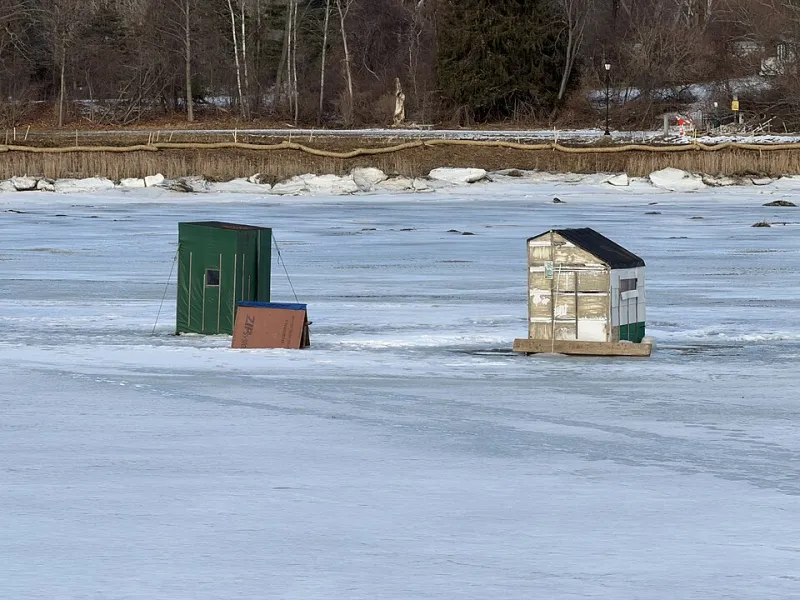
Photo: AntiCompositeNumber, CC BY-SA 4.0, via Wikimedia Commons
The knock comes at 7:15 a.m., two raps on a plywood door that's bolted to a frozen lake.
"You eat chili for breakfast or you go hungry," says Ray Dupont, who's been drilling holes on Lake Winnipesaukee since the Ford administration. Inside his shanty, a dented pot of canned chili burbles on a propane burner, and — this is the part that took me a second — a fillet of yellow perch, caught not forty minutes earlier, is folded into the mix like it's the most natural thing in the world.
It is, apparently. Up here, the lake isn't just where dinner comes from. It's the kitchen.
A Food Culture With No Written Record
Ask around the Meredith docks or the bait shops in Wolfeboro and you'll hear the same thing: nobody's ever really documented what ice fishermen eat out there. There's no cookbook, no Instagram account, no tourism board brochure. Just a few hundred shanties scattered across Winnipesaukee, Squam, and Lake Sunapee, each one running its own improvised kitchen at 20 degrees below wind chill.
What you find when you start knocking on doors is a cuisine built entirely around three constraints: everything must fit in a sled, everything must run on propane, and everything tastes better because you earned it.
The perch-and-chili maneuver is common enough to have variants. Some guys swear by canned corn as the bridge ingredient. Others fold the fish into boxed mac and cheese the moment the water boils. One fellow on Squam Lake, who asked that I not use his name because "my wife thinks I eat sandwiches all day," adds a packet of taco seasoning he keeps in his tackle box, wedged between the hooks and the split shot.
The Chowder Wars
Every shanty neighborhood has its hierarchy, and on the north end of Winnipesaukee, that hierarchy is decided once a season, over chowder.
"It's not officially a competition," Dupont explains, stirring a pot heavy with cubed perch, salt pork, and an amount of black pepper he measures by sound. "But it's officially a competition."
The rules, as far as I can gather, are unwritten and strictly enforced. Milk versus cream is the great theological divide — the same split that runs through the state's shore-side chowder houses, just with higher stakes and colder judges. Potatoes must be the small gold ones. Onions are sautéed in the same pan the fish was seared in, because nobody's washing two pans at minus ten.
The reigning champion is a retired schoolteacher named Carl, who won three years running with a chowder that includes a splash of the maple syrup he taps from his own trees in Moultonborough. His rivals call it cheating. They also all do it now.
The Drumstick Incident
Not everything out here comes from the lake. Which brings us to the peri-peri drumsticks.
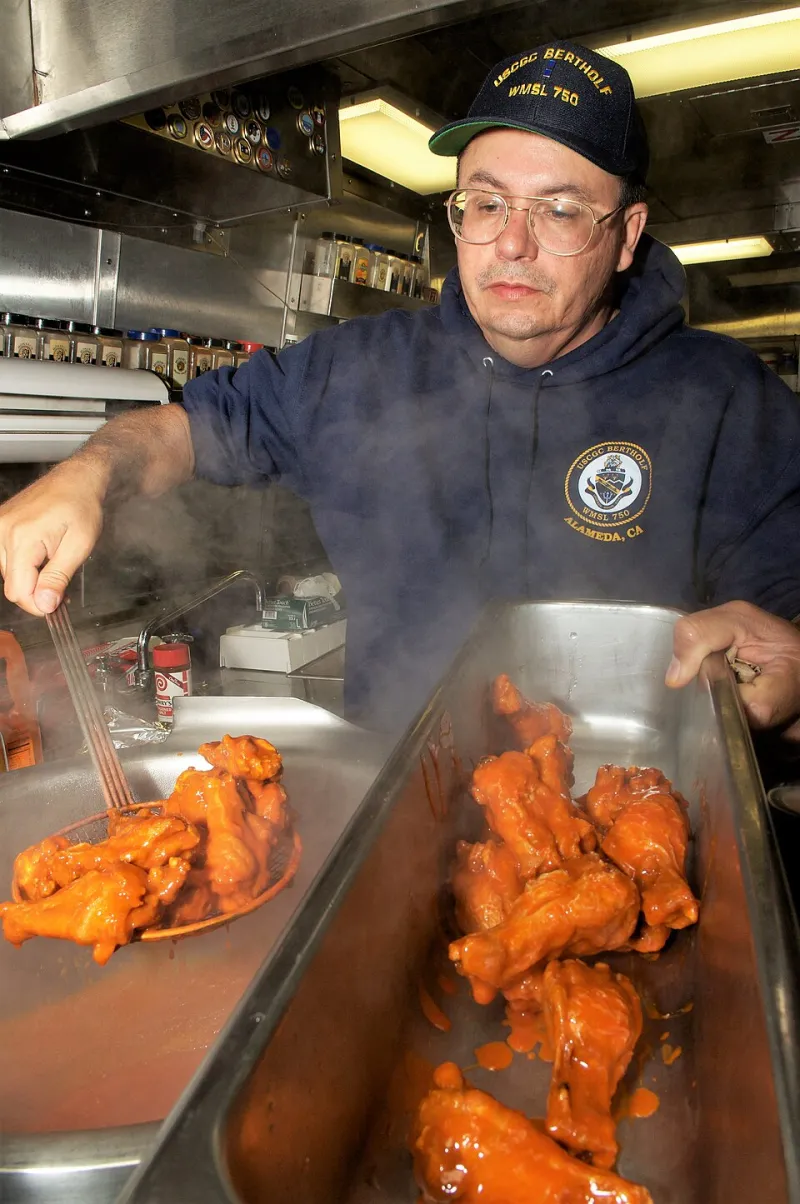
Word travels fast on the ice, and for the past two winters, a particular shanty near Rattlesnake Island has drawn visitors for a reason that has nothing to do with the lake trout bite: a marinade of African bird's eye chili, garlic, and vinegar that its owner — a Worcester transplant named Eddie — blends at home and transports in a repurposed ketchup bottle.
"Everyone fishes for perch," Eddie says, fanning a drumstick over a cast-iron skillet until the skin crackles. "I fish for an audience."
The smell, in a space the size of a garden shed, is overwhelming in the best possible way. Within twenty minutes, three neighboring shanty owners have "just stopped by." This is how the economy works out here. You cook something good, you pay for it in company.
Why the Cold Makes the Cook
There's a thing that happens to food at twenty below that no restaurant can replicate. The steam hits the cold air and turns to fog. Your coffee steams even after it's in the cup. A sandwich eaten with numb fingers is, objectively, a better sandwich.
The fishermen have a name for the whole ritual — "the feed" — and it's the feed, as much as the fishing, that gets people out of bed at 5 a.m. to drill through eighteen inches of ice. Some of the men I met haven't kept a fish in weeks. They come for the pot, the propane hiss, the argument about whether cream belongs in chowder.
By late afternoon, the light goes gold across the frozen bay, the skillets go quiet, and the shanties glow like lanterns scattered across the white. Ray packs his sled, saves a fillet for tomorrow's chili, and sums it up the way everyone out here does — without trying to be poetic about it.
"Best kitchen in the state," he says, patting the two-burner stove. "Terrible ventilation. Perfect company."
If you go: Ice shanty culture runs on invitation, not tourism. Bait shops around Meredith Center and Alton are the honest place to start — ask what's biting, buy something, and let the rest happen. And if you're ever offered a peri-peri drumstick a half-mile from shore, take two.