The Casserole With a Bullhorn: Defending American Chop Suey in New Hampshire
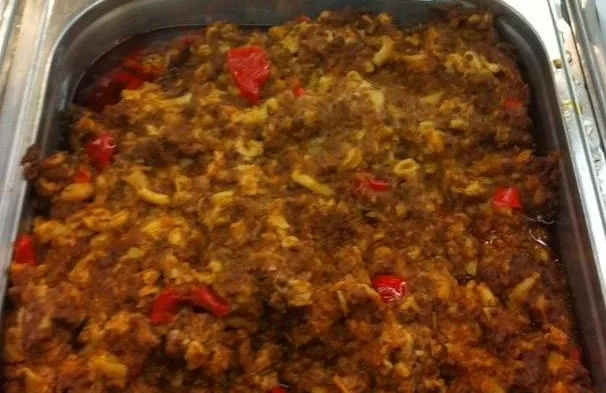
Photo: Whoisjohngalt, CC BY-SA 3.0, via Wikimedia Commons
American chop suey is the kind of dish that gets called a guilty pleasure by people who have never had to feed a family on a Tuesday. In New Hampshire, it shows up on diner menus, in church cookbooks, and in the weeknight rotation of anyone who grew up with a mother or grandmother who knew how to stretch a pound of beef. It is tomato and macaroni and ground meat, usually onion, sometimes green pepper, and always a little more salt than you think.
It is not Chinese food. It is not elegant. It is not trying to be. That is exactly why it belongs on this state’s table.
The Dish That Refuses to Be Fancy
The first thing to understand about American chop suey is that the name is a lie of convenience. It borrows from Chinese-American restaurant culture, but the dish itself is a New England home-cooking invention, a Depression-era and postwar adaptation that turned a little meat and a lot of pasta into something that could feed a crowd. The tomato sauce is not a stir-fry. The pasta is not rice. The whole thing is a casserole by another name.
In New Hampshire, that casserole has a particular accent. It is less about authenticity and more about utility. It uses what is in the pantry. It reheats well. It freezes. It travels to a potluck in a covered dish and comes home empty. It is the kind of food that shows up at a church supper not because anyone is trying to impress, but because everyone knows it will get eaten.
From Chop Suey Palace to Church Cookbook
The chop suey name came from Chinese immigrants who opened restaurants in American cities in the late nineteenth and early twentieth centuries. Those restaurants served an Americanized version of a Chinese dish, and the name stuck. Home cooks took the idea and ran with it, substituting macaroni for rice and tomato sauce for soy. By the mid-twentieth century, American chop suey was a staple in community cookbooks, school cafeterias, and diner kitchens.
New Hampshire’s version is part of that broader New England tradition, but it has its own stubborn streak. It is not as sweet as some versions. It is not as soupy. It is a little more likely to include green pepper, and a little more likely to be served with a slice of buttered bread and a shrug. It is food that says: this is what we have, and it is enough.
Elbows, Peppers, and Other Fights Worth Having
Ask three New Hampshire cooks how to make American chop suey and you will get four opinions. The pasta is the first fight. Elbow macaroni is the traditional choice, but shells, rotini, and even penne have their defenders. The elbow camp argues that the curve holds the sauce. The rotini camp argues that the spiral does the same thing with more surface area. The shell camp just likes the way it looks. All of them are right, and none of them will admit it.
The second fight is green pepper. Some cooks would not dream of leaving it out. Others consider it a personal insult. The anti-pepper faction says it overwhelms the dish. The pro-pepper faction says it adds a necessary vegetal bite. In 2026, this is still a live debate in diners and church halls across the state. The only safe position is to put the peppers on the side and let people make their own choices.
The third fight is the meat. Ground beef is standard, but some cooks use sausage, and a few use a mix. The tomato is usually canned, sometimes crushed, sometimes sauce. The seasoning is usually salt, pepper, and maybe a little garlic powder. A bay leaf is considered fancy. A pinch of red pepper flakes is considered radical.
Why It Says New Hampshire
American chop suey is not a white-tablecloth plate. It is not a story about a chef’s childhood in a way that ends with a foam. It is a story about making do, and making enough. That is a deeply New Hampshire story. The state is not flashy. It is practical. It is the kind of place where a diner can serve the same dish for decades and nobody thinks it needs a rebrand.
The casserole also says something about community. It is a potluck dish. It is a church-supper dish. It is a dish that gets doubled when someone is sick or has a baby or loses a job. It is not glamorous, but it is generous. That counts for more than a lot of people admit.
The Weeknight Table I Want
The version I want is simple. Elbow macaroni, cooked just short of al dente. Ground beef browned with onion and green pepper, if you are in the pepper camp. A can of crushed tomatoes and a spoonful of tomato paste. Salt, pepper, a little garlic. Maybe a splash of Worcestershire, maybe not. Let it simmer until the pasta and sauce agree to live together. Serve it with grated Parmesan from the green can, or none at all, and a piece of buttered Italian bread.
It is not a dish to Instagram. It is a dish to eat on a Tuesday in December when the light is gone by four-thirty and everyone is hungry. It is not fancy. It is not trying to be. It is American chop suey, and in New Hampshire, that is enough.