No Sommelier Required: Finding Holiday Wine Value in New Hampshire's State Store Aisles
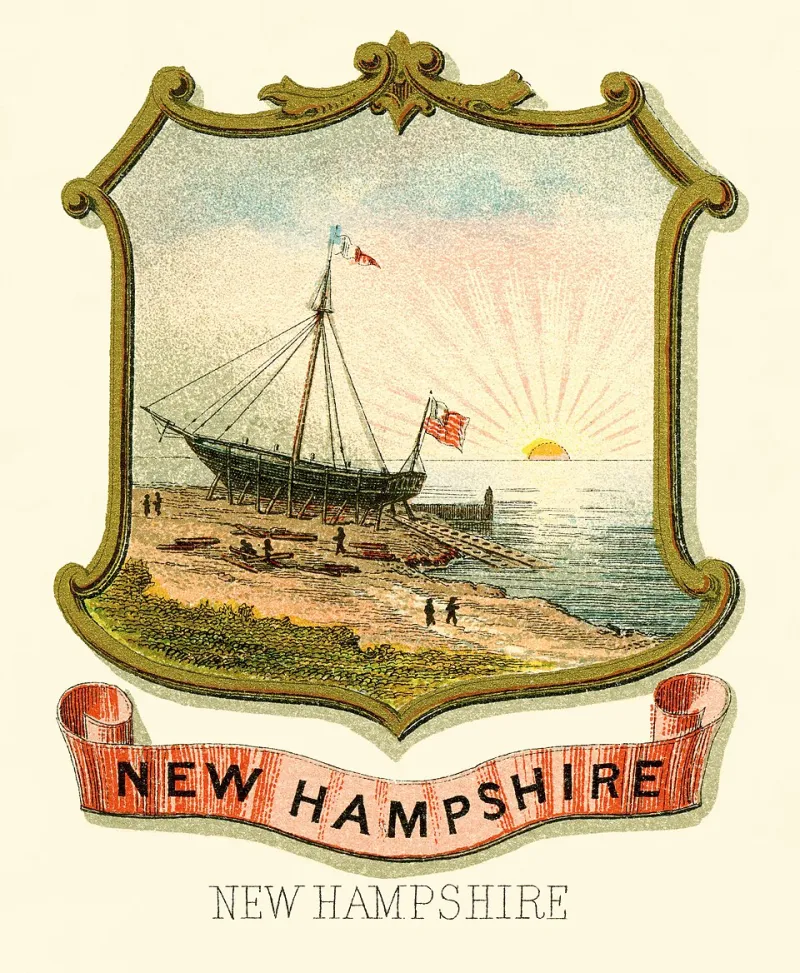
Photo: Henry Mitchell Restoration by Godot13, Public domain, via Wikimedia Commons
Every December, somewhere between the party invitations and the office gift exchange, the question arrives: what wine do I buy for a crowd? In New Hampshire, the answer often starts in a fluorescent-lit aisle of a state liquor and wine outlet, where the price tags are clear, the staff is busy, and nobody is going to ask you about terroir unless you bring it up.
That is not a knock. It is the pitch.
The Aisle With No Attitude
The New Hampshire Liquor & Wine Outlets are run by the state, which means the retail experience is closer to a well-stocked warehouse than a boutique. The aisles are broad. The inventory is deep in the categories that move. The prices are posted. There is no sales tax, which helps at checkout, and there is no sommelier hovering over your shoulder, which helps if you are buying twelve bottles for a holiday party and do not want to explain your budget.
The result is a wine list that is not curated in the way a private shop is curated. It is curated by volume, by state purchasing, and by what a lot of people actually drink. That is not the same as a great restaurant list. But for holiday entertaining, it can be the most useful list in the state.
How the State Store Shapes What You Drink
The state-store system has two big effects. First, it creates buying power. The state buys in large quantities, and those quantities translate into prices that are often lower than nearby private shops, especially on widely distributed brands and everyday bottles. Second, it limits the range. You will find plenty of reliable producers, but you will not find the weird small-lot bottles that a good independent shop might tuck onto a shelf.
That trade-off matters. If you want a case of sparkling wine for a party, the state store is hard to beat. If you want a single bottle of grower Champagne or a skin-contact white from a producer you read about, a private shop is the better bet. The state store is a value channel, not a discovery channel. The trick is to use it for what it does well.
The holiday season is when that distinction becomes useful. You are not building a tasting menu for six. You are building a drinks table for a crowd that includes your uncle who likes dry reds, your cousin who only drinks something with bubbles, and a neighbor who will quietly ask for ice. The state store is built for that crowd.
Where Private Shops Still Win
Private wine shops are not obsolete. They are the place to go when you need advice, a special order, or a bottle that tells a story. They are also better at tastings, which are a real advantage in December. A good shop can steer you toward a producer you have never heard of, and the staff can tell you whether the wine is ready to drink or needs a few years.
But private shops have overhead. Their prices reflect it. A state store may not have the same romance, but it has the numbers. The honest comparison is not state store versus private shop. It is state store for volume and value, private shop for curation and counsel. Most holiday hosts need both, even if they only have time for one.
A 2026 Holiday Strategy
Start with a budget and a headcount, not a grape. For a standing party, plan on roughly half a bottle per drinking guest, more if the party runs long or the food is salty. Then build a short list: something sparkling, something white, something red, and something sweet or fortified for the end. You do not need a dozen options. You need a few good ones in quantity.
In the state store, shop the posted discounts and the case stacks first. The holiday season brings markdowns on sparkling wine, bigger reds, and dessert wines, and those are the bottles that disappear fastest. Check the vintage on the label. Check the price per bottle against the case price. Do not be afraid to buy the same reliable red in quantity. A party is not the place to experiment with every bottle.
For sparkling, look for dry styles from France, Spain, and California. For white, consider Riesling, Chenin Blanc, or an unoaked Chardonnay that can handle a buffet. For red, Beaujolais, Cabernet, and Portuguese blends are usually safe bets. For dessert, a tawny port or a small bottle of ice wine can cover a lot of ground. None of this requires a sommelier. It requires a little planning and a willingness to read the shelf tags.
The Case for the Price Tag
The state store will never be a romantic wine experience. It is bright, it is busy, and the person next to you may be buying a case of hard seltzer. But it is also honest. The price is the price. The selection is what it is. And for a holiday host trying to pour wine for twenty people without blowing the food budget, that honesty is worth something.
New Hampshire's best wine list may not have a sommelier. It may have a fluorescent ceiling and a cart with a squeaky wheel. But it also has a case of Côtes du Rhône at a price that lets you say yes to one more guest. That is a holiday value worth defending.