Between the Bologna and the Bulletin Board: Why New Hampshire's Country Stores Are the State's Best Kept Dining Secret
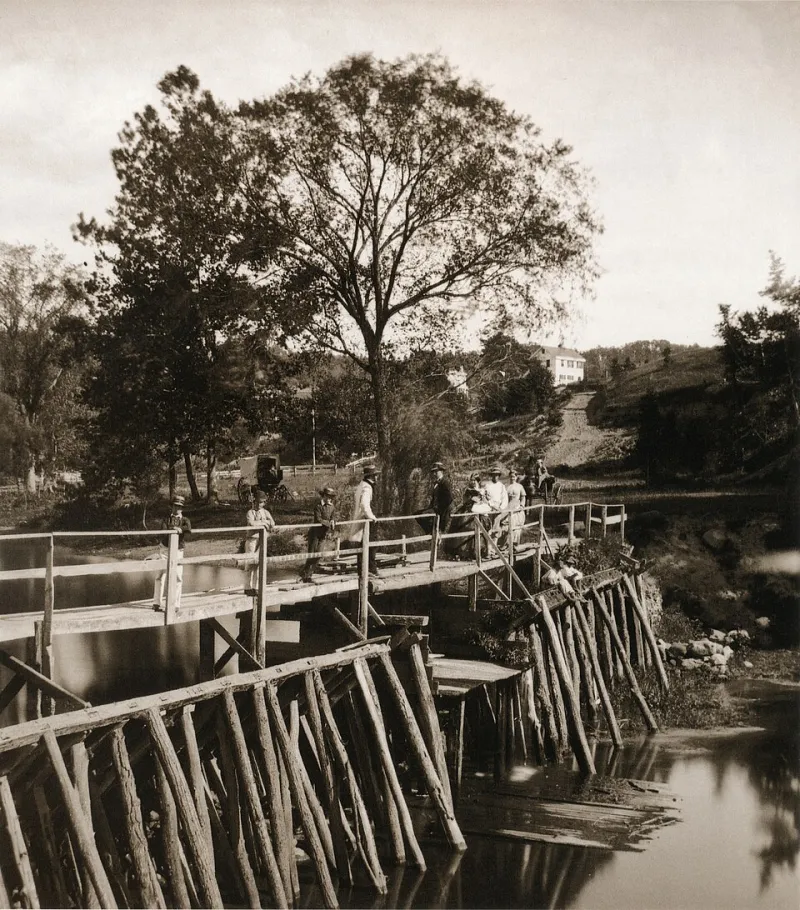
Photo: William England, Public domain, via Wikimedia Commons
There's a moment that happens in every old New Hampshire general store. You walk in for a coffee, and twenty minutes later you're standing at the deli counter holding a sandwich the size of your forearm, listening to a debate about whether this winter will finally be a real one, and you realize you haven't thought about your phone once.
That's not an accident. That's a 150-year-old business model working exactly as intended.
The Store That Refused to Close
Ask around the North Country and you'll hear the same story with different names: the village store that changed hands a dozen times, almost went under, and got saved by somebody with deep roots and shallow pockets. In towns like Tamworth and Landaff and Sugar Hill, the general store isn't a nostalgia act — it's the post office, the gas station, the breakfast spot, and the local news network, all under one sagging roof.
What most visitors don't realize is how many of these stores are also serious kitchens. Behind the counter, someone is slicing roast beef at 6 a.m., boiling local eggs for egg salad, and baking pies that would hold their own at any farm-to-table restaurant in Portsmouth — for half the price and none of the attitude.
"People drive forty minutes for the sandwiches," one store owner told me, shrugging like that's normal. "Then they stay an hour. That's the whole business."
Why the Deli Counter Beats the Dining Room
New Hampshire has no shortage of good restaurants. What it has very few of is places where the food, the commerce, and the community all happen in the same ten square feet. The general store is the original third place — before the coffee shop, before the brewpub, there was the counter at the country store where you ordered a number and waited your turn.
The economics are brutal, which is why stores keep disappearing. Wholesalers deliver minimums to places with maximums measured in hundreds of year-round residents. Insurance goes up. The building needs a new roof every decade. And yet the survivors share a few traits: scratch-made food that justifies the trip, a retail section of local maple, honey, and jam that tourists actually buy, and owners who understand they're not just selling lunch — they're selling the room itself.
The Sandwich Standings
We ate our way from Pittsburgh to Hampton Falls to settle it. These are the counters worth pulling over for.
1. The Turkey Cranberry at a classic Lakes Region store. House-roasted turkey, stuffing made in-house, cranberry sauce from a local farm. It's Thanksgiving in a paper wrapper, and it ruins other sandwiches for you.
2. The Italian on the Seacoast. Genoa, provolone, oil and vinegar on bread delivered warm from a bakery that's been supplying the same store since the 1970s. Simple, salty, perfect.
3. The Hot Pastrami in the North Country. Where the winters are long, the pastrami is generous, and the rye is grilled until it crackles. Order it with a pickle from the gallon jar by the register.
4. The Egg Salad That Shouldn't Work. Nothing fancy — just the right amount of mayo, paprika, and bread toasted on a griddle that's seen forty years of service. Sometimes restraint is the flex.
5. The Breakfast Sandwich at the hill town store. Local eggs, sharp cheddar from a farm you passed on the way, on a house-baked biscuit. Get there before 9 or don't get there at all.
Pie as a Barometer
Here's a tip from a season of field research: judge any general store by its pie case. If there's a rotating lineup — apple in the fall, blueberry in July, the legendary chocolate cream whenever the baker feels like it — you've found a store that takes the kitchen seriously. If the pie is shrink-wrapped and shipped in, enjoy your chips and move on.
The best stores treat dessert like a seasonal menu. One store near the White Mountains runs a maple cream pie every sugaring season that people genuinely plan trips around.
How to Shop Like a Local
A few rules of the road:
- Bring cash. Some stores take cards now; some pretend to. An ATM fee is cheaper than the look you'll get.
- Order the special. The handwritten sign by the register is not decorative. It's what the owner felt like making today.
- Check the bulletin board. Missing dog, firewood for sale, a fiddle night at the grange hall. This is the actual front page of the town.
- Buy something off the shelf too. A jar of local mustard keeps the lights on in February.
The Last Walk-In
Every general store on this list could tell you a version of the same story — the year they almost closed, the regulars who organized, the roof fund, the GoFundMe. These places survive because people decide they matter, then act like it.
So here's the pitch: pick a Saturday, pick a road you've never driven, and pick a store from the list. Order the sandwich. Split a slice of pie. Read the bulletin board.
New Hampshire's most underrated dining rooms don't take reservations. They just take your number, call it when it's ready, and remember your order the next time you come through — whenever that is.