Twelve Dollars and a Second Helping: Why the Grange Hall Supper Is New Hampshire's Most Honest Meal

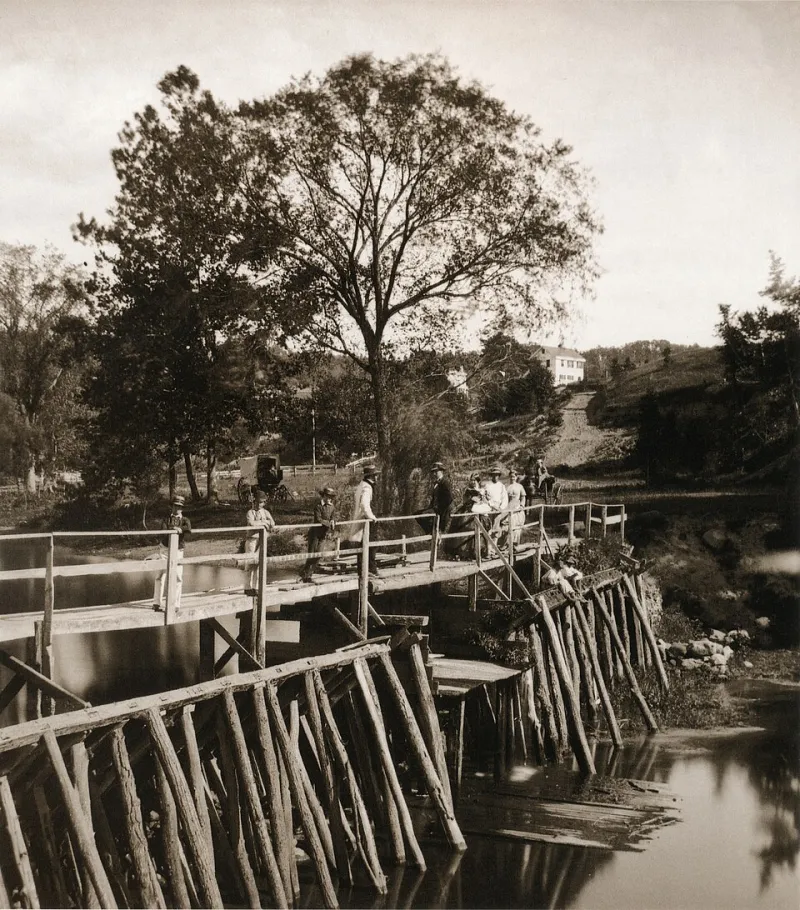
Photo: Ian Petticrew, CC BY-SA 2.0, via Wikimedia Commons
There's a moment at every Grange hall supper in New Hampshire — usually around 5:45 p.m., about fifteen minutes before the doors open — when the line outside starts to organize itself. Regulars know where to stand. Newcomers hover, uncertain, holding exact change. And somewhere inside, a woman in a flour-dusted apron is doing the math on how many more pans of chicken pie can be stretched to cover the crowd.
This is the state's oldest continuous dining scene, and it costs about twelve dollars.
A Tradition Older Than the Menu
The Grange — formally, the Order of Patrons of Husbandry — arrived in New Hampshire in the 1870s as a farmers' advocacy group, and the halls followed soon after: plain, sturdy buildings with a stage, folding chairs, and a kitchen that could feed two hundred people without breaking a sweat. The Grange's membership rolls have thinned over the decades, but the suppers never stopped.
In towns like Canaan, Orford, and East Andover, the community dinner calendar still hums along through the colder months: baked bean and ham suppers in late winter, roast turkey before the holidays, chicken pie nights whenever the volunteers can be marshaled. Some halls are technically Granges; others are grange-adjacent — church annexes, old scouting lodges, the historical society's meeting room. The food logic is identical everywhere.
And the menus have barely moved in a century. Baked beans sweetened with local maple. Red flannel hash when the beets are around. Homemade pies — apple, mincemeat, squash — arranged on a long table near the door so nobody can pretend they didn't see them. It's farm-to-table without the slogan, because it was never anything else.
The People in the Kitchen
Every one of these suppers runs on a core crew of six to a dozen volunteers, many of them retired, some of them third-generation. The peeling and the rolling start the night before. Beans go into the oven in the afternoon — real baked beans, in bean pots, for hours. The pie crusts alone represent a full day's work.
Ask anyone back there why they do it and you'll get a shrug, then a story. A hall that needed a new roof. A fire company that needed a truck. A neighbor who was going through a hard winter. The suppers are fundraisers on paper, but functionally they're how a town checks in on itself. The money matters; the gathering matters more.
There's also a quiet apprenticeship happening. Younger volunteers are learning the bean pot techniques and the pie crust ratios from people who learned them from people before that. No one has written any of it down. It doesn't need to be.
The Unwritten Rules
If you're visiting — and you should be — a little etiquette goes a long way.
Come early or come patient. Seats fill fast, and the line is first-come, first-served. Bring a book or bring a friend; the line is half the social experience.
Bring cash. Small bills. Some halls have made it to the twenty-first century with a QR code, but don't count on it.
Take a turn at the pie table. Dessert is usually extra or donation-based, and skipping it is technically legal and morally questionable.
Talk to your tablemates. You will be seated with strangers, which is the entire point. By the second cup of coffee you'll have restaurant recommendations, a snowplow guy's number, and possibly an invitation to something in the spring.
Second helpings are allowed — after everyone's been through the line. Watch for the nod from the kitchen. It's a beautiful thing.
Why It's the Most Authentic Meal in the State
New Hampshire's restaurant scene has never been stronger — tasting rooms in the Seacoast, tasting menus in the Whites, cider dinners in the Lakes Region. We cover it with enthusiasm. But the Grange supper occupies a different category entirely. It's not a performance of local food culture. It is local food culture, unbroken, running on the same ovens and the same recipes and largely the same families for a hundred years.
For twelve dollars you get a plate of food that no restaurant could profitably serve, cooked by people who will not accept a compliment gracefully, in a room where every conversation is technically eavesdropping and nobody minds.
The season runs roughly from maple time through mud time and picks up again when the woodstove does. Check a town's library bulletin board, the general store's window, or the local paper's church-and-community listings — the suppers are still advertised the old way.
Go hungry. Bring cash. Compliment the pie.
That's the whole system, and it's worked for a century.